Where Does the Reply Go?
Every vendor sells you the automation that sends. Nobody sells the one that listens. So the customer who says yes says it into a void.
A window cleaning company I build for sends an automated follow-up two days after every quote. A text goes out: still want us out for those windows? It works. People reply. Last month one of those replies came back in four minutes, "yes, can you do Thursday," and it sat in a log nobody was watching for nine days. By the time someone saw it, the customer had hired the next company on their list.
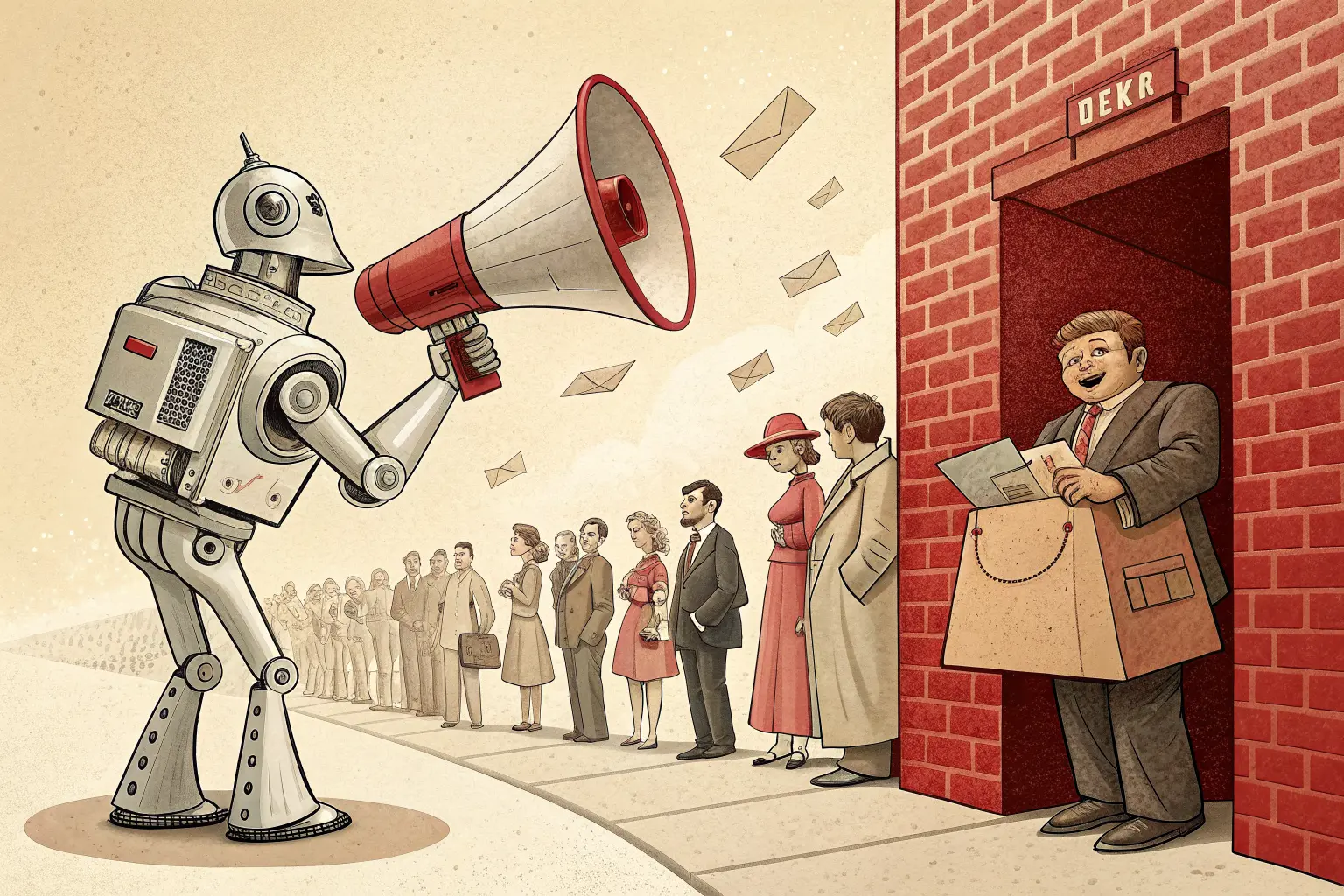
That is the part no vendor will ever demo. They sell you the megaphone. Nobody sells you the ear.
Watch any AI automation pitch and notice how much of it is outbound. The bot sends the quote. The review request. The appointment reminder. The win-back campaign for customers who went quiet. Outbound demos beautifully because it is a one-way street. Nothing talks back. It looks like pure productivity, a tireless employee firing off perfect messages while you sleep.
But a message to a human being is not a broadcast. It is the first line of a conversation, whether you meant it that way or not. The second you automate outreach at scale, you have manufactured inbound at scale. Replies. Questions. Yes. No. Can you come earlier. Is that price with tax. Every one of those is a person expecting a person, and expecting one soon, because you are the one who reached out first.
And the clock is faster than you think. Someone who replies to a text expects a text back in minutes, not business days. The same person who will happily wait a week on an email writes you off in an afternoon over SMS, because you chose the channel that implies someone is right there holding the phone. Pick the intimate channel, inherit the intimate expectation.
The system that sent the message almost never has a plan for catching the answer. The quote goes out from a no-reply address. The text comes from a number nobody monitors. The review request points to a form, so when the customer instead just texts back "guy was great, showed up 40 minutes late though," that lands nowhere. You built a mouth and forgot the ears.
An unanswered yes is worse than never reaching out at all. You paid a monthly fee to look negligent at scale.
That is the real cost, and it never shows up in the pricing. If you had never sent the follow-up, the customer forgets you and moves on, neutral. Nobody got hurt. But you did reach out, they did respond, and then you went silent. Now you are the business that ignores people. The automation did not save you a customer. It cost you one, and it made you look worse than doing nothing would have.
Notice, too, what these systems report back to you. Messages sent. Delivery rate. Open rate. Maybe click rate if they are feeling fancy. Not one of those numbers is "replies a human answered within the hour," because that is the number that would expose the hole. The dashboard stays green and growing while the actual conversations your customers started rot in a queue. You are measuring the easy half and calling it the whole.
Here is what actually happens when I wire this up for a client. The outbound is the easy twenty percent. An afternoon of work. The real job is the other eighty: where does a reply land, who owns that inbox, what is the response-time expectation, and what happens to a text that comes in at 9pm on a Saturday. That plumbing is boring. It does not demo. And it is the entire game. Vendors skip it because building it means knowing how your business actually runs on a Tuesday, which they do not, and because "replies route to a shared inbox a human checks every hour" is not a sentence that closes a deal.
Some vendors will tell you the bot handles the replies too. Conversational, they call it. Fine. Then ask what happens when a customer asks something the bot cannot answer, which at a five-person shop is most things. Can you work around the dog. My gate code changed. Can I pay half now and half when it is done. The bot either guesses, and now you are honoring a promise nobody at your company ever made, or it dead-ends the customer a second time. A reply handler that cannot hand off to a human is just a slower void.
So before you sign anything that sends messages to your customers, ask one question, and do not let them talk around it. When a customer replies to one of these, where does the reply go, who sees it, and how fast? If the answer is a no-reply address, a dashboard nobody logs into, or "the AI takes care of it" with no human standing behind the AI, you are not buying automation. You are buying a megaphone aimed at people who can shout back, pointed into an empty room.
The sending was never the hard part. The listening is the product. Make them sell you that one.